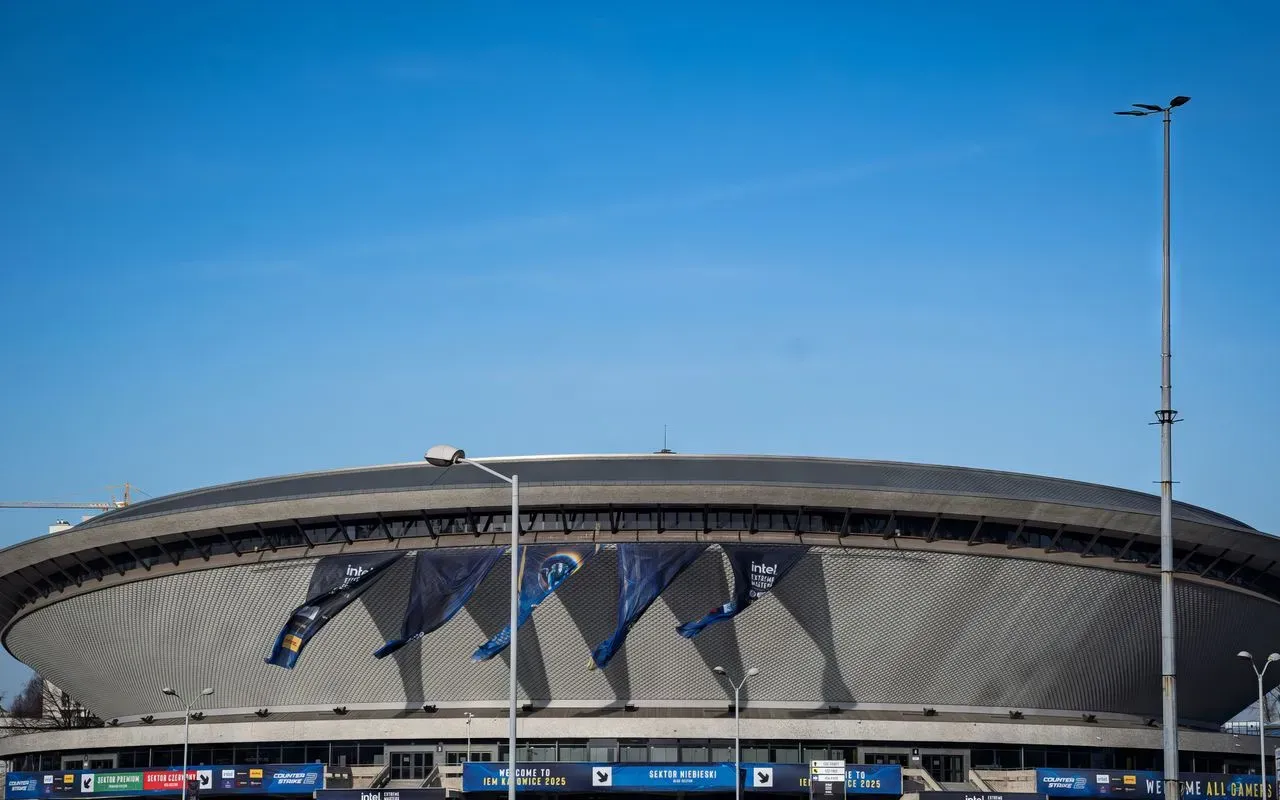
Esports is organised competitive video gaming, played by professionals within teams, in leagues and tournaments, and followed by an audience online and in arenas. It is also the part of the sports business where demand reads most clearly: its audience is born online, informs itself online and searches online before buying a ticket or opening a stream. This page sets out what the usual esports metrics count, what they leave out, and what observed demand lets you decide.
Why esports is where demand reads most clearly
In most sports, part of demand flows through channels that leave few traces: the habit of going to the ground, the family TV subscription, the local club. In esports, that offline base is thin. A fan discovers a game online, follows a team online, watches its matches on a streaming platform and plans online to go and see it play.
Every step produces searches: a match time, the platform carrying it, the creator commentating it, a ticket price, a hotel near the venue. Those searches come before the act. They are addressed to no one, which sets them apart from a survey answer. They are dated and located, which sets them apart from an aggregated audience.
The result is an audience whose intent is largely observable. A football season-ticket holder searches little: they know the ground, the channel and the kick-off. An esports fan, however loyal, searches for every match time, because schedules change from one competition to the next and from one time zone to another.
Esports viewership: what the dominant metrics measure
The esports economy is told through three indicators. All three are useful. None measures demand.
Peak viewers
Peak viewers is the highest number of people watching a match or tournament broadcast at the same moment, across all platforms. It measures an instant, usually the end of a final. It says nothing about how many people tried to watch, how many stayed, or where they came from. It rewards format and time slot as much as interest. We look at what peak viewers do not measure.
Hours watched
Hours watched is the total time all viewers spent in front of a broadcast. It accumulates: a long tournament carried on many channels mechanically produces more of it than a short event. It describes the supply of content as much as the audience's appetite.
Co-streaming
Co-streaming is the live rebroadcast of a competition by content creators on their own channels, with their own commentary. It widens reach, but it blends two audiences: people who came for the competition and people who came for the creator. Viewership driven by co-streaming says little about demand for a team or a game, as the audience for a T1 versus Karmine Corp match shows.
All three indicators count exposure: how many people, and how long they spent in front of a screen. Exposure can be bought, scheduled and added up across channels. The 2026 Esports World Cup is a case in point: the organiser claims 850 million viewers across platforms and 440 million hours watched, against 175,000 tickets sold in Paris. Both series can be accurate at once. They do not measure the same thing.
Esports demand: what searches reveal before the act
Esports demand is the set of intentions an audience expresses before a committed act: buying a ticket, subscribing, travelling, buying a jersey, following a team. It shows in searches, because they precede those acts and carry their context: a place, a date, a game.
Four families of searches are enough to describe it.
- Match times and where to watch. What time a team plays, where to stream a final. They show who wants to follow a specific competition, and from which time zone. See schedule searches around Worlds 2026.
- Tickets and accommodation. They signal an intention to travel, with a date and a destination. This is the most committed form of demand, and the most useful for sizing an event.
- Games and teams. Their relative volume shows which title, which organisation and which player carry interest, regardless of the exposure they are given.
- Home cities. The geography of searches locates the audience: a capital, mid-sized cities, neighbouring countries. It is what viewership figures lack most.
These signals replace neither ticketing nor viewership. They come before both, at a point when the venue, the date, the price or the partnership can still change. The Esports World Cup in Paris, whose Counter-Strike 2 final had to change venue because tickets sold out, shows the cost of discovering demand at the box office. The notion of a signal is covered in the Signals category.
Who decides, and with what reading
Esports brings together decision-makers with different interests. Each has a question that observed demand answers better than exposure.
Esports organisations
Organisations such as Karmine Corp or Team Vitality live off their community: event ticketing, merchandise, partnerships. Their question is where their audience actually is, beyond the people commenting on every match. The geography of searches tied to an organisation shows the cities where a fan event, a tour or a pop-up store would find its public.
Game publishers
Publishers such as Riot Games run the competitions for their own games. They choose host cities for finals, time slots for regional leagues, the structure of circuits. Searches by territory and time zone show where demand outstrips the supply of live events.
Event organisers
An organiser like the Esports World Cup sets capacities, venues and prices before knowing its sales. Demand by game, by day and by home city is the data that allows sizing before ticketing opens, rather than correcting afterwards.
Non-endemic brands
A non-endemic brand is one whose business has no direct link to video games: banking, automotive, food, insurance. It enters esports to reach a young audience it struggles to reach elsewhere. Its question is not the size of the audience, but the density of its target within that audience and the association it can build there. See esports sponsorship for non-endemic brands and, for choosing territory and timing, the Activation category.
Broadcasters and platforms
Broadcasters and streaming platforms trade off exclusive rights against co-streaming, reach against control. Demand separates the attention captured by a competition from the attention captured by the creators commentating it. The final edition of ZEvent shows what live attention does, and does not, say about lasting interest.
Federations and governing bodies
Bodies such as France Esports campaign for the recognition of the discipline with public authorities and the sports movement. They often rely on stated-preference surveys. Observed demand gives them a verifiable complement that does not depend on a question put to a panel. Esports' place in the Olympic movement raises the same question: on 30 October 2025 the IOC and Saudi Arabia ended the twelve-year partnership that was to stage the Olympic Esports Games. We analyse what that cancellation says about demand.
Host cities and regions
A city or region hosting an esports event invests in a venue, logistics and an image. Its question is about spillover: who will come, from where, and for how long. Accommodation and transport searches tied to an event give a first estimate before attendance figures exist, and allow several candidate events to be compared.
The limits of reading demand through search
Search does not see everything. Part of the esports audience gets its information directly from social networks, community servers or streaming platforms, without going through a search engine. In some markets the dominant engines are not the ones used in Europe, which means adapting the source.
A search is also an intention, not a purchase. A gap between two territories or two games is a ranking, not a sales forecast. Presenting it that way, rather than as an expected ticket count, is what makes it defensible in a review. These rules are set out in the Methodology category, and quantified sports business cases in the Analysis category.
Where to start
A first reading of esports demand fits in three questions: which game or team carries my audience's interest, where that audience is, and when it searches. The answers often change the choice of a venue, a city or a partnership before ticketing or viewership would, later and at greater cost.